The first few notes of a familiar parade song can change the feel of a kitchen. A ride soundtrack can make an afternoon of homework feel a little less ordinary. A Disney park music radio station is built on that small shift: the moment sound carries you from where you are to somewhere full of color, motion, memory and possibility.
For theme-park fans, audio is never just background noise. It is the welcome announcement before a show, the music drifting through a land at sunset, the chorus everyone in the car knows by heart. A thoughtfully programmed online station brings those moments together — a theme park in your headphones for families, longtime fans, and anyone who could use a cheerful escape.
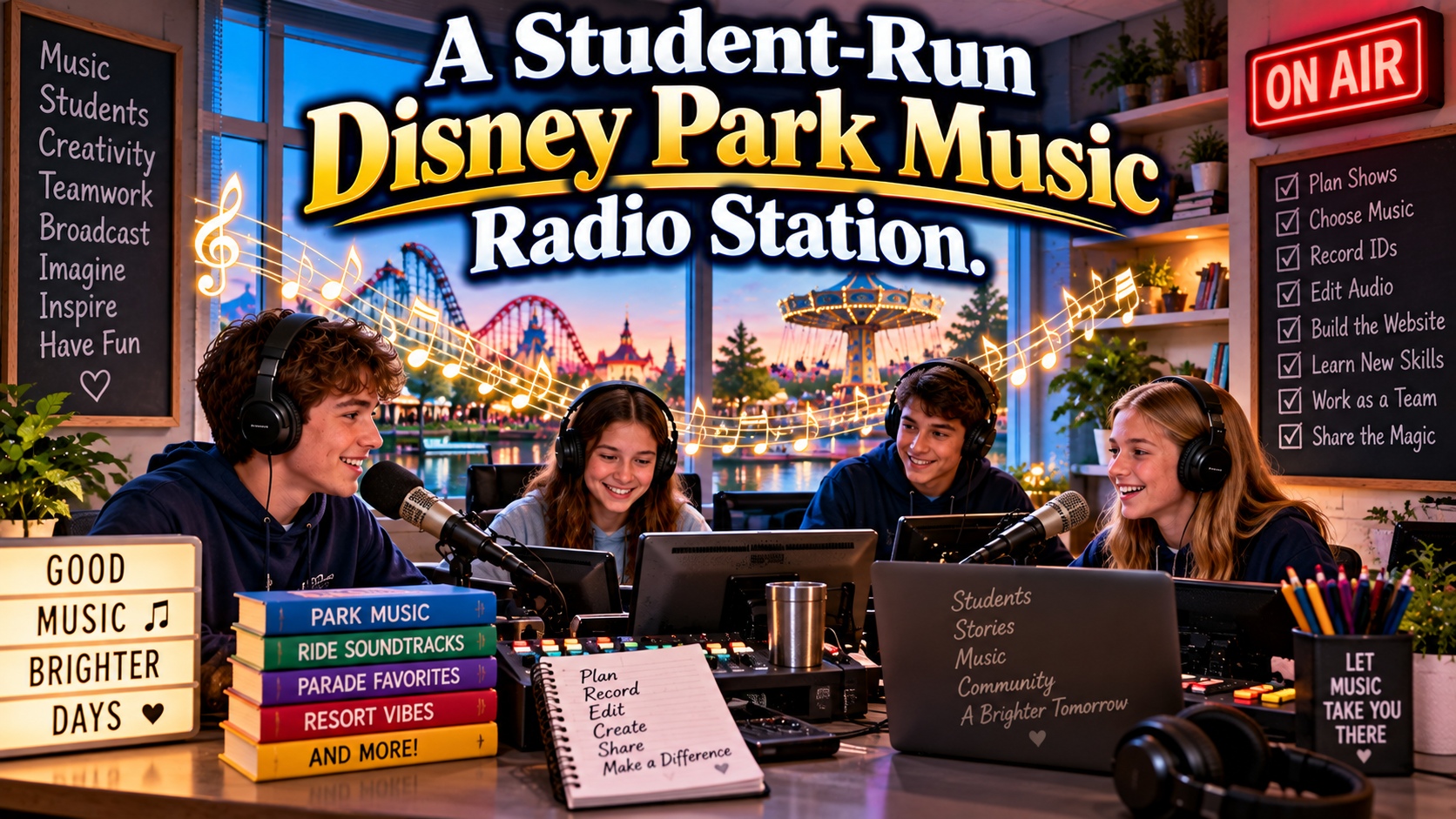
That is what Magic of the Mouse Radio was built to do, and it is produced with help from students in grades 3 through 8 at Assumption Regional Catholic School in Galloway, New Jersey, under the direction of Mr. William Guerro, the school’s technology teacher.
How to Listen to Magic of the Mouse Radio
You can start listening in under a minute, and it is free.
On a computer, open the player right here on magicofthemouse.org and press play. Nothing to install, nothing to sign up for.
On a phone or tablet, download the free Live365 app from the Apple App Store or Google Play, then search for Magic of the Mouse Radio and tap to listen. Add it to your favorites and it is one tap away every time after that.
The stream runs continuously, so you can leave it on in the background while you cook, drive, work, or plan your next trip.
What Makes a Disney Park Music Radio Station Different
A playlist can play a favorite song. A radio station can create a journey.
That difference comes from curation. Rather than putting hundreds of tracks on shuffle and hoping the mood holds, the station is programmed with music, park-show audio, attraction soundtracks, parade recordings, station IDs and short original features. One moment may feel like waiting for a nighttime spectacular to begin. The next carries the energy of a main-street march, followed by a gentler instrumental that lets the memory linger. Our What You’ll Hear page walks through everything in the rotation.
The choices between tracks matter as much as the tracks themselves. A well-timed station intro makes listeners feel welcomed in. A student-recorded feature adds personality. A familiar bit of ride audio sparks a smile from an adult while giving a child a brand-new sound to imagine. The station becomes more than a collection of files — it becomes a place to visit.
That human touch is meaningful in a world full of automated recommendations. Algorithms can guess what resembles a song. They cannot always understand why a particular transition feels like walking from a bustling park entrance into a favorite land, or why a quieter piece belongs after a big celebratory finale.
Student-Run Radio Is Real Creative Work
Behind the happy sounds is a genuine learning experience. When students write a break, record an announcement, edit a segment, or prepare a feature for broadcast, they are doing work with a real audience in mind. That changes the assignment. Their words are not graded and filed away. They become part of a live station heard by people who chose to press play.
Students also build and write the station’s website — the news, the blog, and the topic pages you are reading right now. Their work brings sincerity to the airwaves, because listeners can hear young creators learning how to communicate clearly and contribute to something larger than themselves.
A Microphone Teaches More Than Microphone Skills
Recording a short station break asks students to think about pacing, pronunciation, confidence and audience. Writing it asks them to choose words that are friendly and useful. Producing it asks them to listen closely, solve small problems, and decide when a piece is ready to share.
Those skills travel well beyond radio. Students practice collaboration when they plan a feature with classmates. They build media awareness learning the difference between creating, editing and publishing. They learn responsibility too: an on-air message should be kind, appropriate, and ready for listeners of many ages.
There is room for every kind of student. The child who loves performing may enjoy recording. The careful listener may excel at editing. A strong writer may create scripts while an organized planner prepares a feature. Student media does not require everyone to shine the same way. It gives different strengths a place on the same team.
Every student on the air uses a made-up on-air name rather than a real one, and no student names or photographs appear anywhere on this site. That keeps the focus where it belongs, on the work itself.
Imperfect Can Be Part of the Charm
Professional polish has value, but it is not the only thing listeners remember. A student voice with real excitement can be more inviting than a perfectly packaged commercial read. The goal is not to imitate corporate radio. It is to make something thoughtful, family-safe and full of heart.
That does not mean standards disappear. Students still benefit from guidance, clear review, and the chance to redo a recording. It simply means warmth matters. A station can sound prepared without sounding distant.
Why Park Music Feels So Good at Home
Theme-park audio fits into daily life unusually well. It brightens a Saturday morning pancake breakfast, gives family game night an upbeat soundtrack, or brings comfort to someone missing a favorite vacation. Because radio continues from one selection to the next, listeners never have to decide what comes next. They can let the atmosphere unfold.
That is particularly helpful for families. A family-safe stream is a welcoming option when children are nearby, without adults inspecting every selection or worrying the mood will suddenly change. The youngest end of that audience has its own corner in Little Ears.
There is a trade-off. A station cannot promise your favorite song at the exact moment you want it — on-demand services are better for that. Radio offers something different: surprise, pacing, and the joy of a treasured sound arriving when you were not expecting it. For many fans that surprise is the whole point.
A Station Worth Coming Back To
What makes a small station worth a listener’s time is not the size of its library. It is the sense that someone cared about the order of things, that the voice between songs belongs to a real person, and that the whole thing was made by people who love the subject.
Put it on during breakfast, in the car, or while the house is busy, and see whether a familiar sound makes the room feel a little brighter. That is the entire ambition, and it is a good one.
Frequently Asked Questions
Is Magic of the Mouse Radio free?
Yes, entirely. There is no subscription and no account to create. Play it in a browser at magicofthemouse.org or through the free Live365 app.
Who runs the station?
It is produced by students in grades 3 through 8 at Assumption Regional Catholic School in Galloway, New Jersey, led by technology teacher Mr. William Guerro. Students write, record, produce and publish the spoken content and the website.
Do students use their real names on air?
No. Every student chooses a made-up on-air name, and no student names or photographs appear on the website or in any recording.
What can I hear besides Disney songs?
Ride soundtracks, queue and area music, parade recordings, show and fireworks audio, park atmosphere from around the world, and original student-produced features between tracks.
Can I listen on a smart speaker or in the car?
Yes. The Live365 app works on phones and tablets, including over CarPlay and Android Auto, and the browser player works on any computer.
Leave a Reply