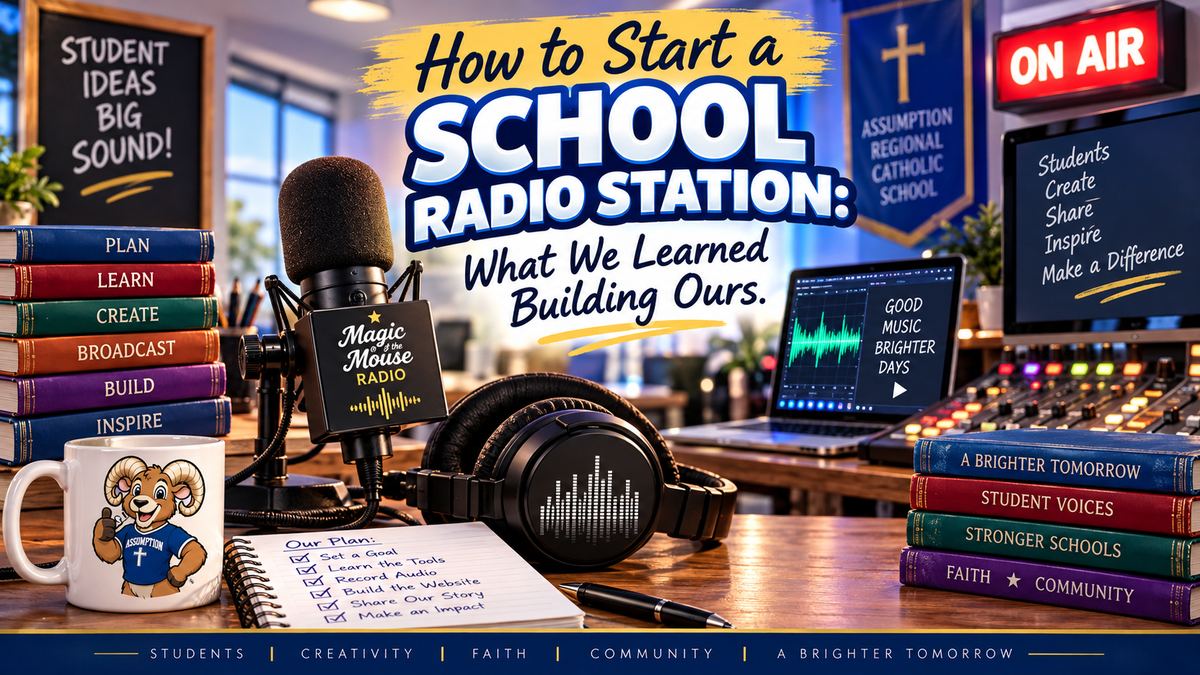
Have you ever wondered how to start a school radio station? This year, our technology classes at Assumption Regional Catholic School in Galloway, New Jersey, are doing exactly that. Magic of the Mouse Radio is a Disney music station that plays around the clock, and this website is its home. Students in grades 3 through 8 help run both.
If you are a teacher, principal, parent or club leader thinking about a station of your own, this post walks through how we set ours up, the choices that made it work for young students, and what the kids are learning along the way.
Why Start a School Radio Station?
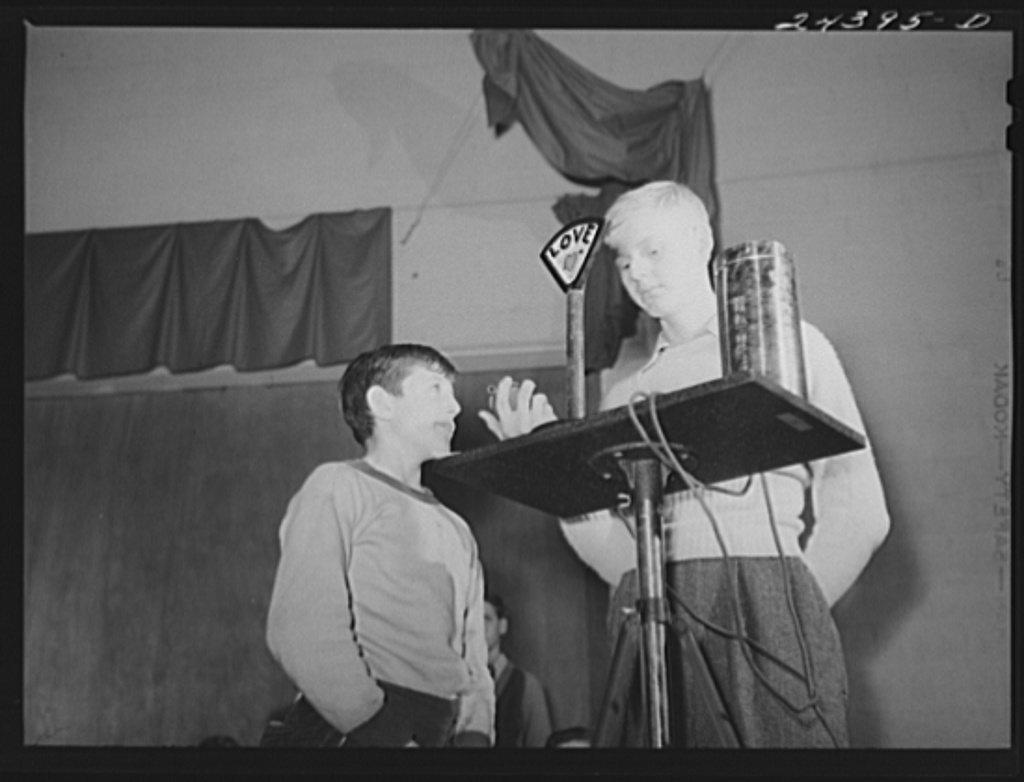
Schools have been putting students on the air for almost as long as radio has existed, and the reasons are as good today as ever. A station gives students a real audience. When kids know people will actually hear their work, they write more carefully, speak more clearly and take more pride in the finished product.
Today it is also easier than ever to start a school radio station. You do not need a broadcast tower or an FCC license to reach listeners. An internet radio station can play on a computer, a phone or a smart speaker anywhere in the world, and much of the setup can be done by one teacher with a laptop.
Step 1: Pick a Theme Your Students Love
Our station plays Disney music: movie soundtracks, Disney+ favorites and theme park audio from parades, shows, fireworks and rides, including music from Disney parks around the world. We chose Disney because nearly every student already knows and loves it, and because it is family-friendly from top to bottom. Parents never have to wonder what might come on next.
Your theme might be different: school news, student-written stories, classical music or local history. The key is to choose something that excites your students and that you are comfortable having your school’s name attached to.
Step 2: Choose How You Will Stream and Handle Music Licensing
Playing commercial music online requires licenses from the organizations that collect royalties for songwriters and performers. This is the part that scares many schools away, but it does not have to. We stream through Live365, a service that bundles U.S. music licensing into its broadcaster plans, so the station stays legal without separate paperwork.
Our library now holds more than 6,000 audio tracks, and the teacher curates all of it. Students do not choose or program the music, which keeps the station consistent and keeps everything appropriate. Listeners can hear it on our Listen Live page or in the free Live365 app.
Step 3: Give the Station a Website Students Can Build
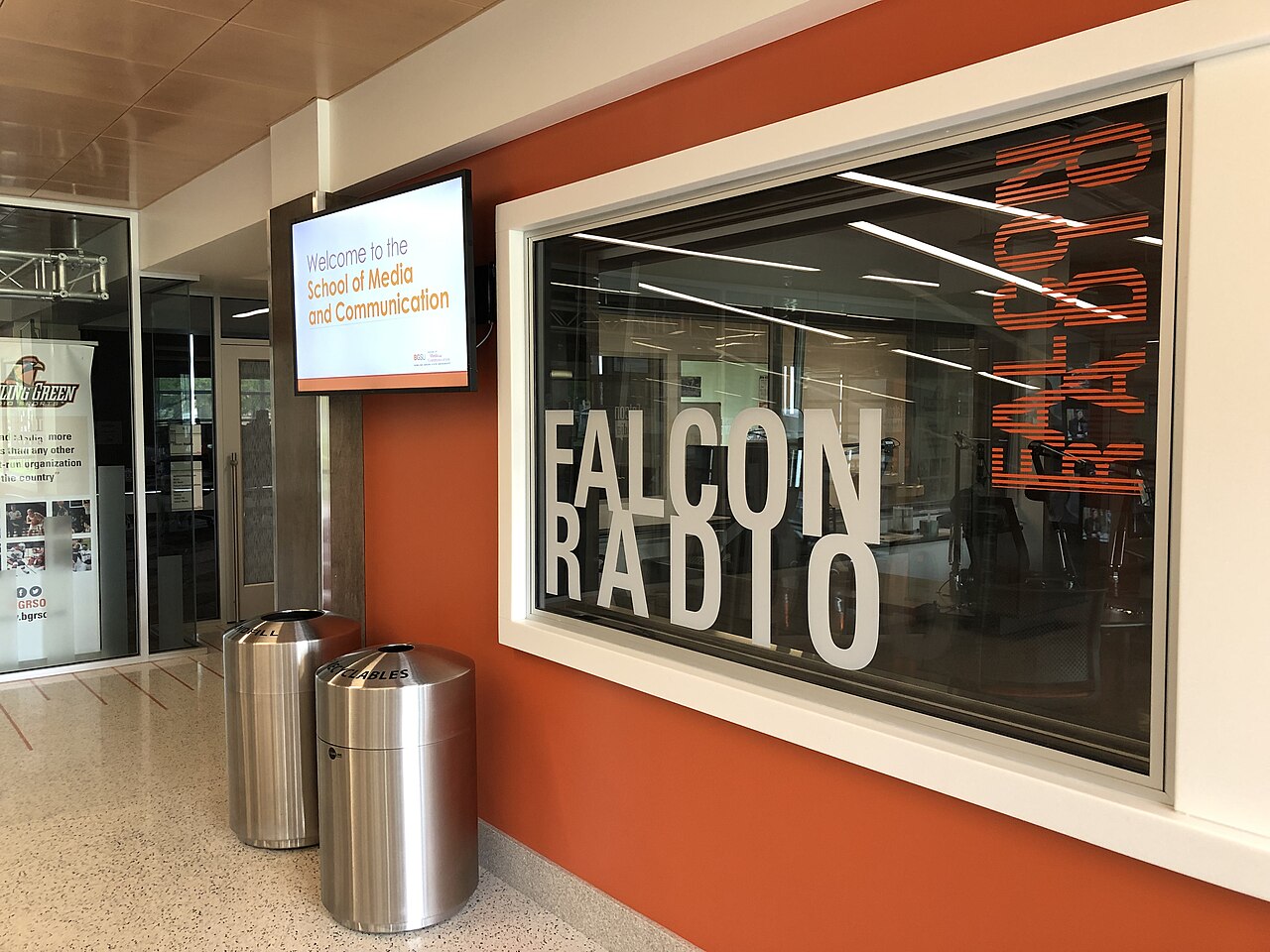
A radio station needs a home online, and building that home is one of the best parts of the project. Our site runs on WordPress. Students work in teams of about four, and each team shares one login set to the Contributor role. That means students can write and save drafts, but they cannot publish or change anyone else’s work. The teacher reviews every draft and publishes it.
Before anything goes into WordPress, students write their articles by hand on a printed draft sheet. It slows them down in a good way. They plan, revise and check spelling before they ever touch the keyboard.
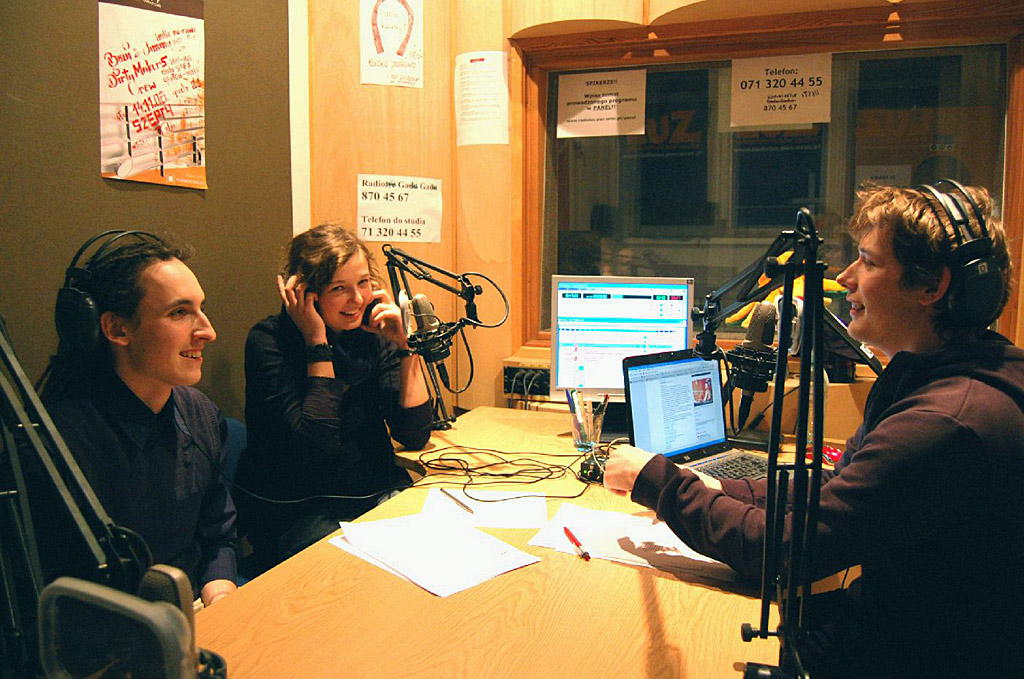
Step 4: Protect Student Privacy From Day One
If you start a school radio station with young students, privacy has to be part of the plan, not an afterthought. Here is what we do:
- Made-up on-air names. Every student picks an “On-Air & Website Radio Name.” Real names are never used, and the names cannot be Disney characters or other brands.
- No student photos or profiles anywhere on the website.
- A parent permission slip, added to the school’s existing media release, with separate yes-or-no choices for recording a voice and for publishing written work.
- Recordings come down from the public archive at the end of each school year.
- No live DJs. Students record short station IDs and promos instead of hosting live shows.
Parents can read more on our For Parents and Teachers page.
Step 5: Fit It Into the Time You Actually Have
You do not need a daily broadcast class. Each of our grades meets once a week for 45 minutes, and the grades never meet together. So the work is built in small pieces that one class can start and another can finish. Students work on Chromebooks, and every grade from 3 through 8 contributes to both the station and the website all year long.
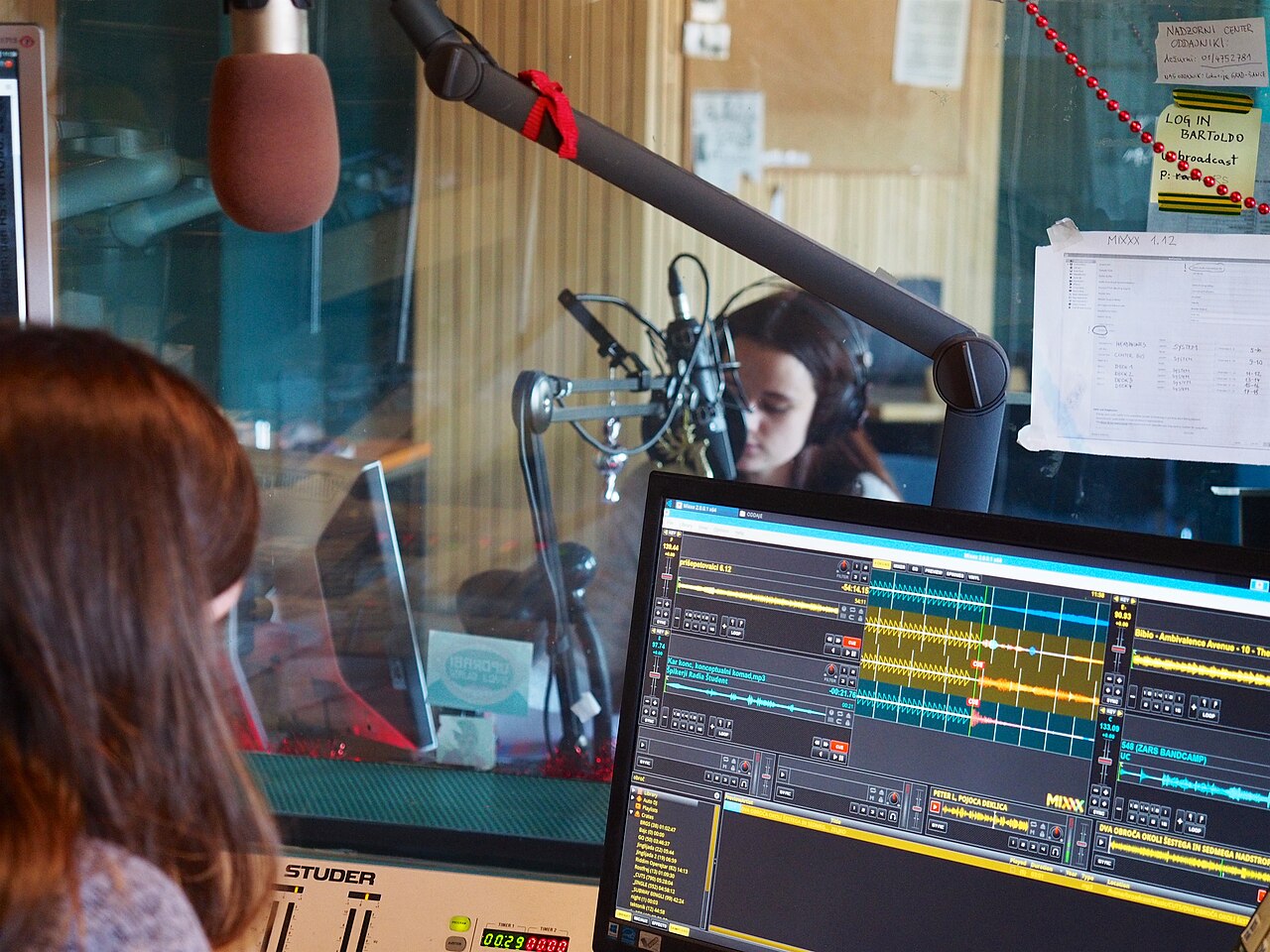
What Students Learn From a School Radio Station
The music is the fun part, but the learning is the real reason to do it. Over the year, our students practice:
- Writing for a real audience, from blog articles to 15-second promo scripts
- Speaking and recording clearly, with good pacing and energy
- Web publishing: drafting in WordPress, adding headings, links and images, and organizing content into categories
- Digital citizenship: protecting their privacy, respecting others online and understanding why their on-air names matter (resources like Common Sense Education are a great companion)
- Copyright and media literacy: why music needs licenses and why we credit every photo we use, like the ones in this post
- Teamwork: sharing an account, dividing jobs and handing work to the next class
Tips If You Want to Start a School Radio Station
- Get your principal on board early. Share your plan for privacy, licensing and supervision before you start.
- Start small. A music stream and a simple website are plenty for year one. You can add more later.
- Keep the teacher in the publishing seat. Students create; an adult reviews and publishes.
- Let students own something real. Station IDs, promos and articles with their on-air names give them a voice without exposing who they are.
- Use free tools where you can. A free audio editor such as Audacity and a Chromebook’s built-in microphone are enough to begin recording.
Come Hear What Our Students Are Building
The best way to understand a school radio station is to listen to one. Tune in on our Listen Live page, read more about our student-run Disney park music station, and if you are ready to start a school radio station of your own and have questions, send us a note. We would love to hear from you.
— Mr. William Guerro, technology teacher, Assumption Regional Catholic School
Photo credits: Top image created for Magic of the Mouse Radio. Other images credited in their captions. All photos were resized; no other changes were made. Magic of the Mouse Radio is an independent fan station and is not affiliated with or endorsed by The Walt Disney Company.
Leave a Reply